




Facilitation, Reflections
Safety or Supervision? Navigating the Gray Areas of Duty of Care

May
Safety or Supervision? Navigating the Gray Areas of Duty of Care
At Blackbox Outdoor Education, we believe that experiential learning thrives when participants are pushed out of their comfort zones—but never at the expense of their safety. A recent tragic incident involving the drowning of popular Indian singer Zubeen Garg off Lazarus Island has sparked a crucial conversation among legal experts and practitioners about the concept of “Duty of Care” (DOC).
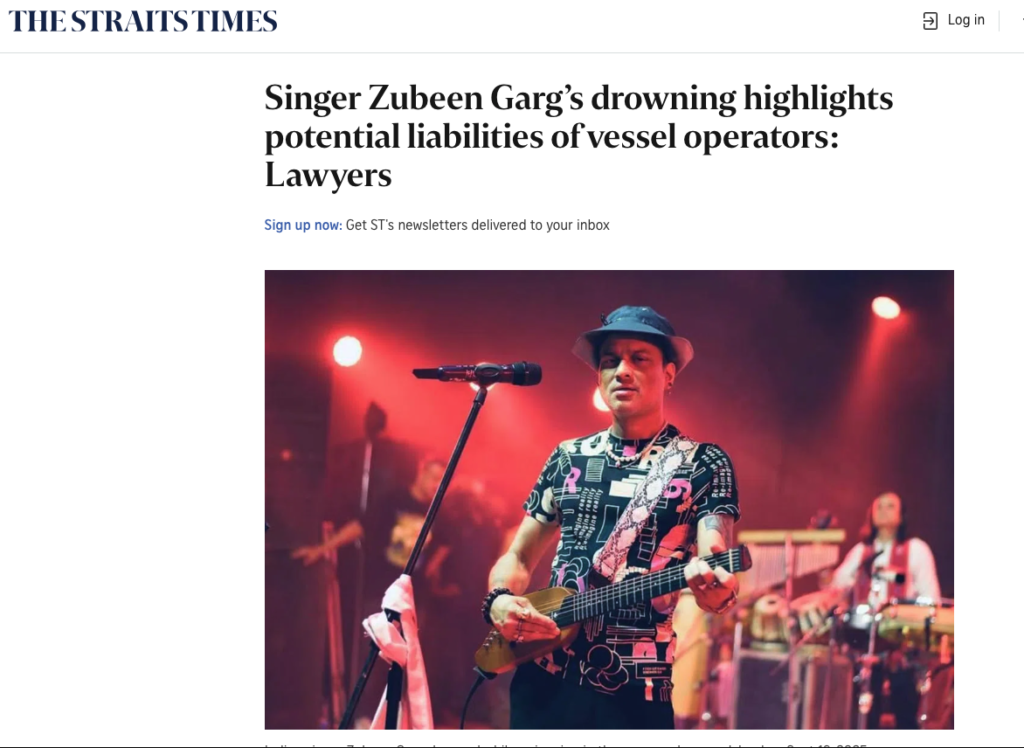
The Incident: A Tragic Afternoon at Sea
In September 2024, Zubeen Garg was on a chartered yacht trip with friends near Lazarus Island. Despite the group being briefed on safety and the necessity of life jackets, Garg—who was severely intoxicated—refused to wear one. After an initial swim, he jumped back into the water without a vest, ignored further attempts by crew members to provide him with safety gear, and eventually became motionless while swimming back to the vessel. Despite the crew’s resuscitation efforts and a quick response from the Police Coast Guard, he was pronounced dead shortly after. A coroner’s inquiry later ruled the death an accidental drowning, but for those of us in the field, it forces us to grapple with a parallel dilemma:
Where does the leader’s legal duty of care end, and the participant’s right to personal autonomy begin?
1. The Invisible Safety Net: What is Duty of Care?
The article highlights that every vessel operator (and by extension, every outdoor practitioner) owes a prima facie duty of care to their participants. This is the legal and moral obligation to take reasonable steps to prevent foreseeable harm.
In our world of outdoor education, DOC isn’t just about following a checklist. It’s an “invisible safety net” we cast over our participants. Whether we are leading a trekking expedition or a high-ropes course, the law presumes we have a responsibility because we are the “experts” in charge of the environment.
2. The Subjective Standard: How Much is “Enough”?
One of the most critical points raised by lawyers in the article is that the degree of DOC is highly subjective. While the standard of care is technically “objective”—meaning what a reasonable practitioner would do—the specific actions required change based on the circumstances.
For example, the article notes that if a participant is intoxicated (or in our case, perhaps exhausted, fearful, or physically limited), the “standard of care” expected from the leader actually increases.
- The Dilemma: If a participant steadfastly refuses safety equipment (like a life jacket or a helmet), is a briefing enough?
- The Reality: Legal experts suggest that a “reasonable” operator might need to go further—perhaps by delaying the activity or restricting access to the area entirely. In outdoor education, this means our “subjective” judgment in the moment is what often determines safety.
3. The “I Didn’t Know” Trap
Perhaps the most unsettling takeaway from the legal analysis is that many people don’t realize they have a Duty of Care until a crisis occurs. The article mentions that a yacht captain might be held negligent even if they didn’t “force” a passenger to do anything dangerous.
In experiential learning, we often work with freelance practitioners or volunteers who may not realize that by simply stepping into a leadership role, they have inherited a legal DOC. Ignorance of the responsibility does not waive the liability. If you are the person with the whistle, the map, or the qualification, the eyes of the law (and the hearts of the families) are on you to act as the “reasonable professional.”
A Call to Our Practitioners
As we continue to design and deliver transformational experiences at Blackbox OE, we want to encourage all our practitioners to hold the concept of Duty of Care at the forefront of their minds.
When you take participants out:
- Observe the “unspoken” risks: Are they tired? Are they peer-pressured? Are they in a state that impairs their judgment?
- Go beyond the briefing: If a participant isn’t following safety protocols, “telling them once” might not be enough to satisfy your DOC.
- Trust your gut: If the conditions or the participants’ state of mind doesn’t feel right, you have the authority—and the duty—to pause.
Our responsibility is to ensure that Duty of Care remains the foundation of every interaction, protecting both our participants and our professional integrity.
To read the full analysis on the Zubeen Garg case and the legalities of vessel operator liability, you can find the original Straits Times article here.
